
The Sprint Retrospective is an event that depends heavily on the participation of team members, and sometimes whoever takes on the ScrumMaster role needs to pull a rabbit out of a hat to break the routine and avoid team passivity.
A simple way to do this is to have key criteria so the team can qualitatively evaluate the Sprint that has passed. But which key criteria should we use?
Daniel Pink defines through experiments in his book Drive that Autonomy is one of the three pillars that sustain people’s motivation at work. We can leverage this concept to create a more participative retrospective model in 4 steps:
1 — Ask the team to think of key criteria
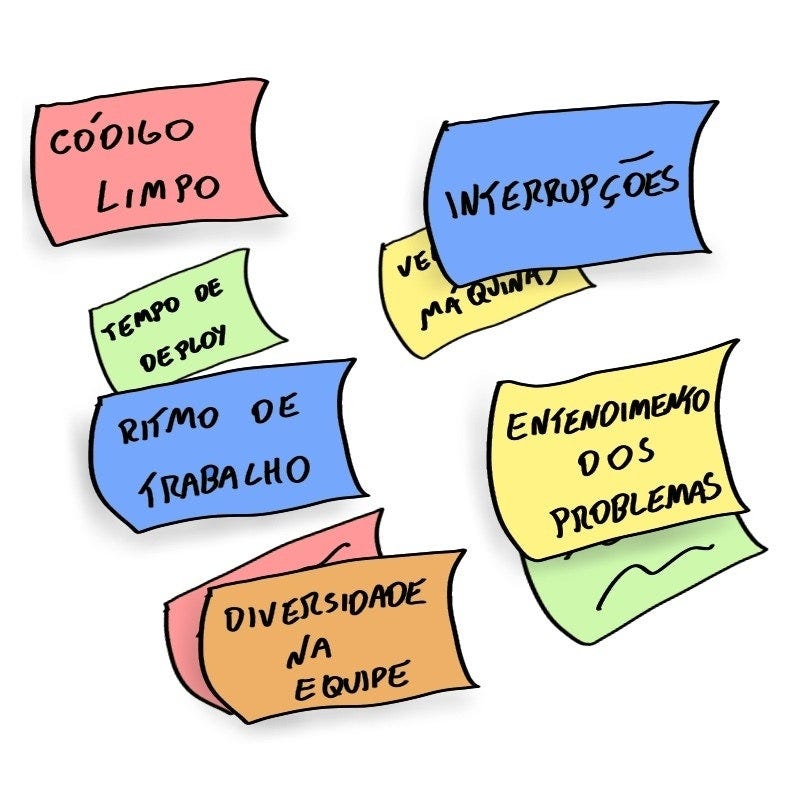
Set a short time limit and write together with the team which factors influence the quality of the team’s work.
Remember that the participation of the entire Scrum team is fundamental during all stages.
2 — Limit the key criteria
You can use dot voting to limit the key criteria that will be used if necessary. The ideal is to have between 5 and 10 criteria at the end of this stage.
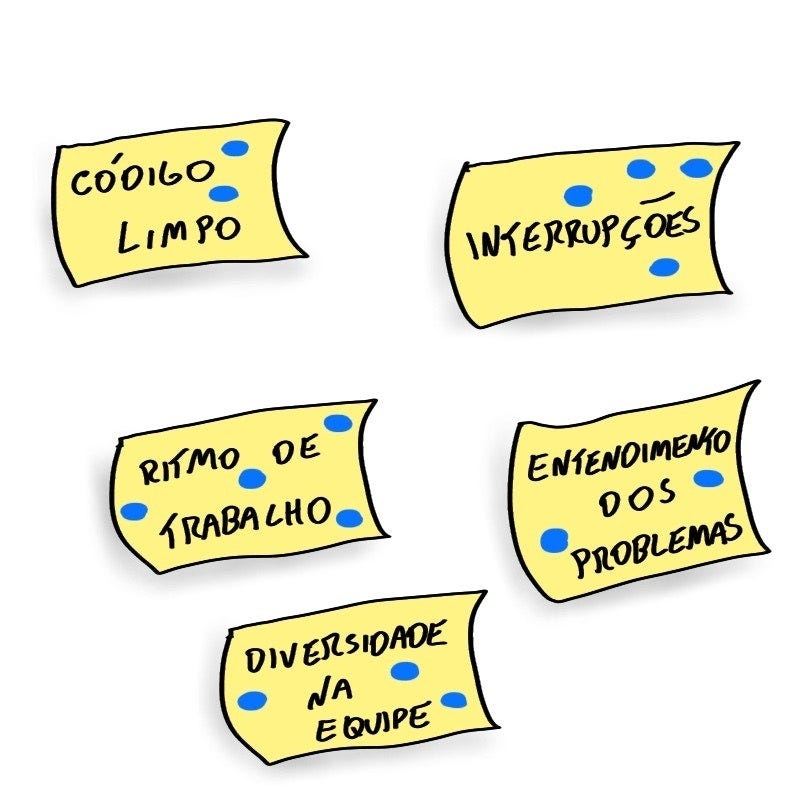
Important: You can choose to merge 2 or more themes if they are very similar, just remember to do this before voting.
3 — Ask each team member to evaluate the last Sprint according to the most voted criteria
Here we don’t need to do a super detailed analysis. We can use 3 satisfaction levels, like a traffic light.
Example: A person can vote green for the Interruptions criterion if they believe they were rarely interrupted in the past Sprint.

Just pay attention to two details: make sure that no one on the team has difficulty distinguishing the selected colors and ensure that all members have evaluated all elected criteria.
4 — Evaluate with the team the evolution across Sprints
One of the main benefits of this technique is being able to debate with the team what has influenced the evaluation of each criterion, and having a small history can help a lot to perceive some trends and possible correlations.
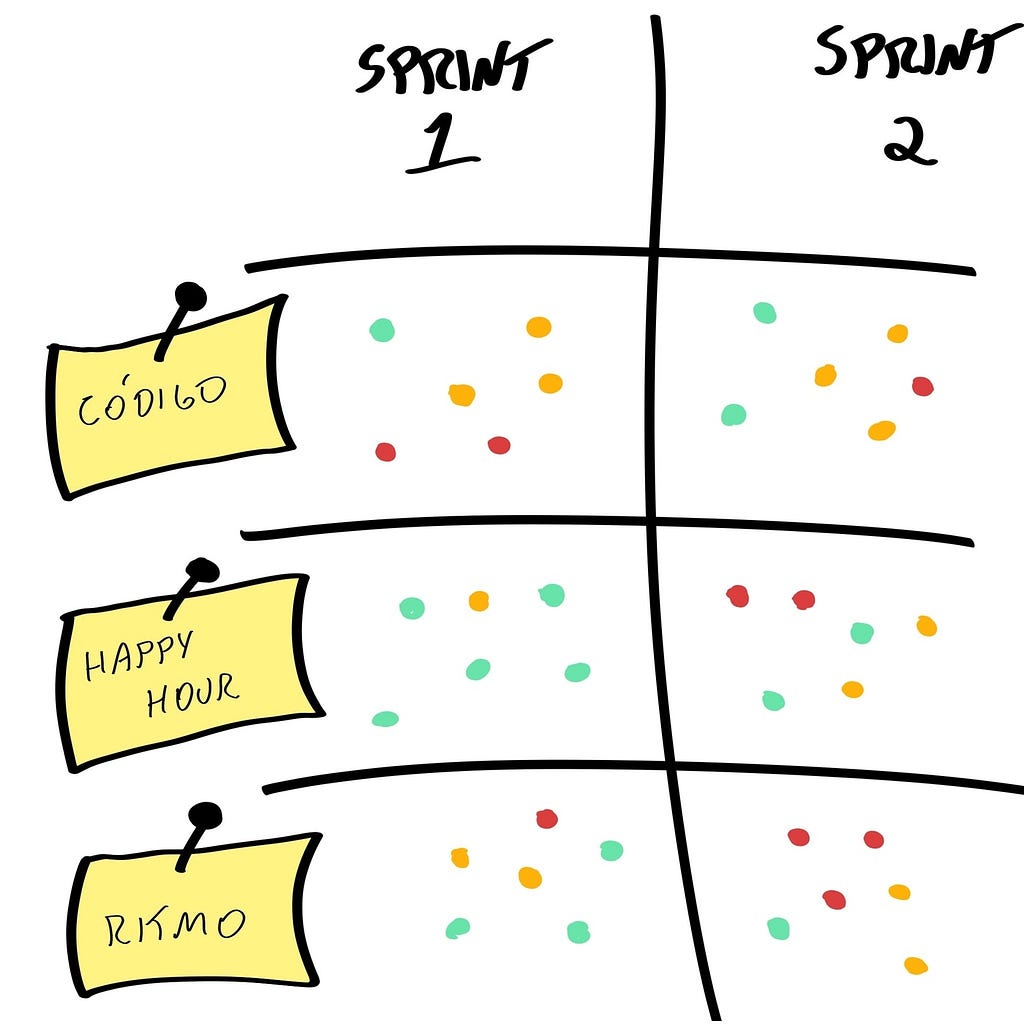
Looking at a joint evaluation of criteria that the team itself established is a great way to break the initial ice of a retrospective.
This can be the initial push the team needs to start proposing actions and experiments with the potential to improve their way of working.